Fellow game developers, designers, product managers, and people interested in high-level design philosophy. The tone should be academic, strategic, and focused on system architecture.
Title: Game Design Architecture: Using a “Pillar Roster” to Solve Scale and Narrative in Competitive Gaming
The challenge of designing a MOBA—or any game with an ever-expanding roster—is the conflict between scale and cohesion. As the number of heroes in Dota 2 pushes past 120, we reach a point of diminishing returns on onboarding effort and narrative clarity.
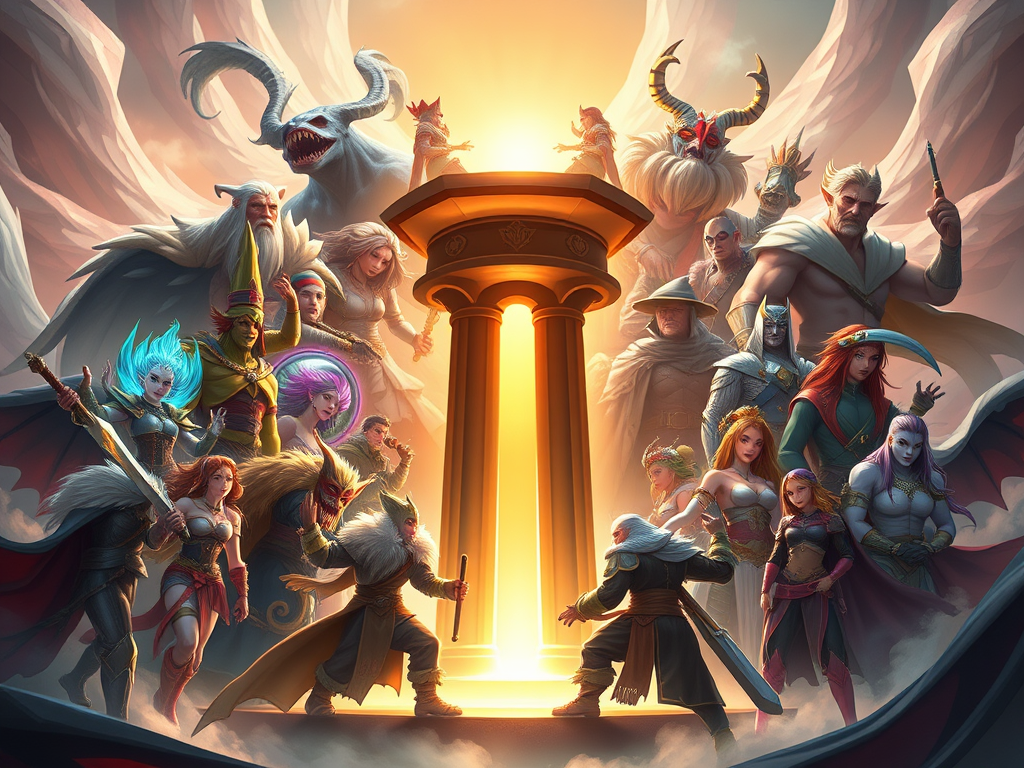
Our proposal is to architect the game around a “Pillar Roster” of 15 heroes. This is not a concept of exclusion, but of gravitational design.
The 15-Pillar Gravitational Model
The concept states that the entire game universe and competitive experience should rotate around a predetermined, balanced group of 15 archetypal heroes.
| Design Area | Rationale for the 15-Hero Focus |
| Product Strategy | Predictable Monetization & Investment: Focusing Arcana/Persona creation on 15 heroes ensures that Valve’s most expensive cosmetic content hits the most-played, most-recognized characters, ensuring higher returns. |
| Narrative Cohesion | Defined Conflict Vectors: These 15 are the protagonists and antagonists of the world. All major lore events and cinematic content are built upon their intersecting stories, giving the universe a stable foundation. |
| Competitive Design | Archetype Stability: The 15 Pillars represent the core design archetypes (e.g., initiator, hard carry, global presence, dedicated healer). New heroes (the “Extended Roster”) are introduced specifically to exploit a gap in the Pillar Roster’s combined utility or to create a direct counter to a specific Pillar. |
| Community Creation | Focused Engagement: Content creators, from Reddit analysts to YouTube casters, will naturally gravitate toward the 15 heroes. Discussions shift from “What hero should I play?” to “How do I counter the Pillar strategy with the Extended Roster?” |
Design Case Study: Lily, The Hemal Nymph
A hero like Lily perfectly exemplifies a hero that can be a Pillar. She represents the archetype of “The Vitality Manipulator”—a concept that must exist in the game to counter pure physical power. Her abilities force players to engage with the concepts of sacrifice and vital resource management, making her essential to the meta-game’s complexity, and therefore, a natural Pillar.
By establishing this clear, intentional hierarchy, a game can grow indefinitely while maintaining a cohesive core that is understandable to new players and strategically rich for veterans.






 Concept But Genius
Leave a comment